




Rain simulations on vehicle models are essential for understanding and optimizing windscreen wiper performance. In this third and final session of our series, we demonstrate GPU-accelerated smoothed particle hydrodynamics (SPH) rain simulations on the Audi E-tron car model using a coupled workflow between

Tag: simulation
Webinar: From Waveforms to AI: Simulating 6G Before It Exists (America’s Session)
September 24, 2026 | 10:00 AM PDT
6G standardization is accelerating: 3GPP RAN1 is actively evaluating candidate waveforms, new duplexing schemes, and advanced channel coding proposals, with each organization running proprietary simulators under subtly different assumptions. This makes direct comparison of results nearly
Webinar: Simulation for Data Center Cooling Infrastructure
AI ready data centers are reshaping cooling infrastructure, with the industry moving from traditional air cooling toward hybrid and liquid cooling architectures to support higher rack densities and stricter efficiency targets. Join this webinar to explore how simulation supports faster decisions, reduced risk, improved
CadenceTECHTALK: Water Wading Simulations and One-Way FSI with the SPH Solver
Join the second session of our three-part transmission simulation series to explore GPU-accelerated SPH water wading simulations using the ANSA SPH solver from Cadence. Learn how to evaluate pressure forces on vehicle components and couple SPH results with a structural solver to perform efficient one-way FSI analysis for … Read More
Webinar: Deploy and Scale Your Simulation in the Cloud with Ansys, part of Synopsys, and AWS
Learn how Ansys, part of Synopsys, and AWS enable engineering teams to deploy and scale simulation workloads in the cloud. Discover how cloud solutions such as Ansys Cloud Burst Compute deliver faster results, greater flexibility, and on-demand access to powerful compute resources.
Overview
Learn how Ansys, part of Synopsys,
Webinar: See it Before You Build it with VisionSym
About this event
Join our upcoming webinar to discover how VisionSym transforms CAD models into photorealistic images using LightTools or LucidShape—eliminating the need for physical prototypes.
With GPU-accelerated ray tracing and photometrically accurate simulations, VisionSym enables both design verification
User2User Mid-Atlantic 2026
About User2User Mid-Atlantic
User2User Mid-Atlantic is focused around these areas:
- Printed circuit board design (PCB) and design for manufacturing
- PCB simulation
- Application specific integrated circuit and field programmable gate array: advanced functional verification
- Calibre design
Why attend User2User Mid-Atlantic
SMACD 2026
Welcome to SMACD 2026
International Conference on Synthesis, Modeling, Analysis and Simulation Methods, and Applications to Circuit Design
CEO Interview with David Zhi LuoZhang of Bronco AI

David Zhi LuoZhang is Co-Founder and CEO of Bronco AI with extensive experience in building AI systems for mission-critical high-stakes applications. Previously while at Shield AI, he helped train AI pilots that could beat top human F-15 and F-16 fighter pilots in aerial combat. There, he created techniques to improve ML interpretability… Read More
Designing and Simulating Next Generation Data Centers and AI Factories
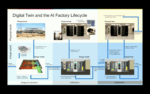
At NVIDIA’s recent GTC conference, a Cadence-NVIDIA joint session provided insights into how AI-powered innovation is reshaping the future of data center infrastructure. Led by Kourosh Nemati, Senior Data Center Cooling and Infrastructure Engineer from NVIDIA and Sherman Ikemoto, Sales Development Group Director from … Read More