






Xebec
Well-known member
I can't post full slides here for reasons, but I found a Nvidia customer brief in 2011 that had a few interesting take-aways:
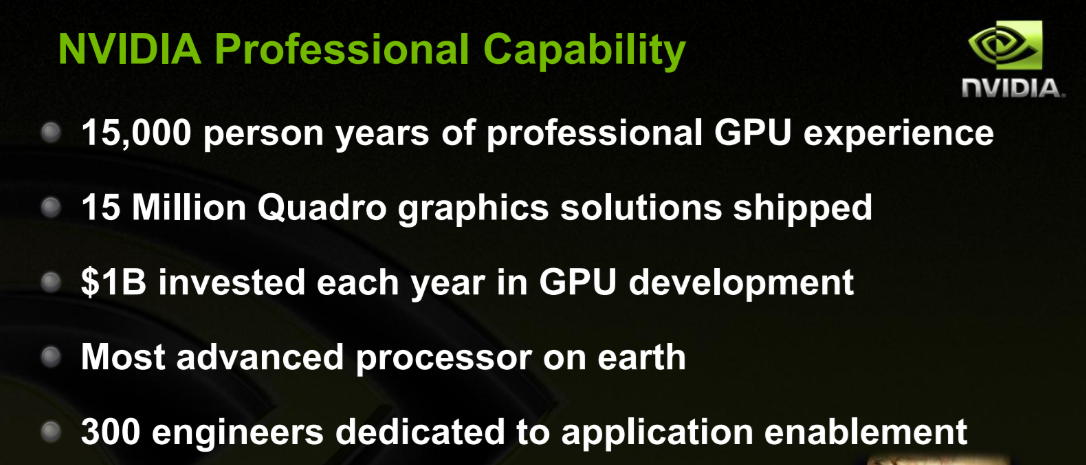
- Nvidia was much smaller in 2011 than today -- ~ $1B vs $20B in R&D. "300 engineers dedicated to application enablement" in 2011...
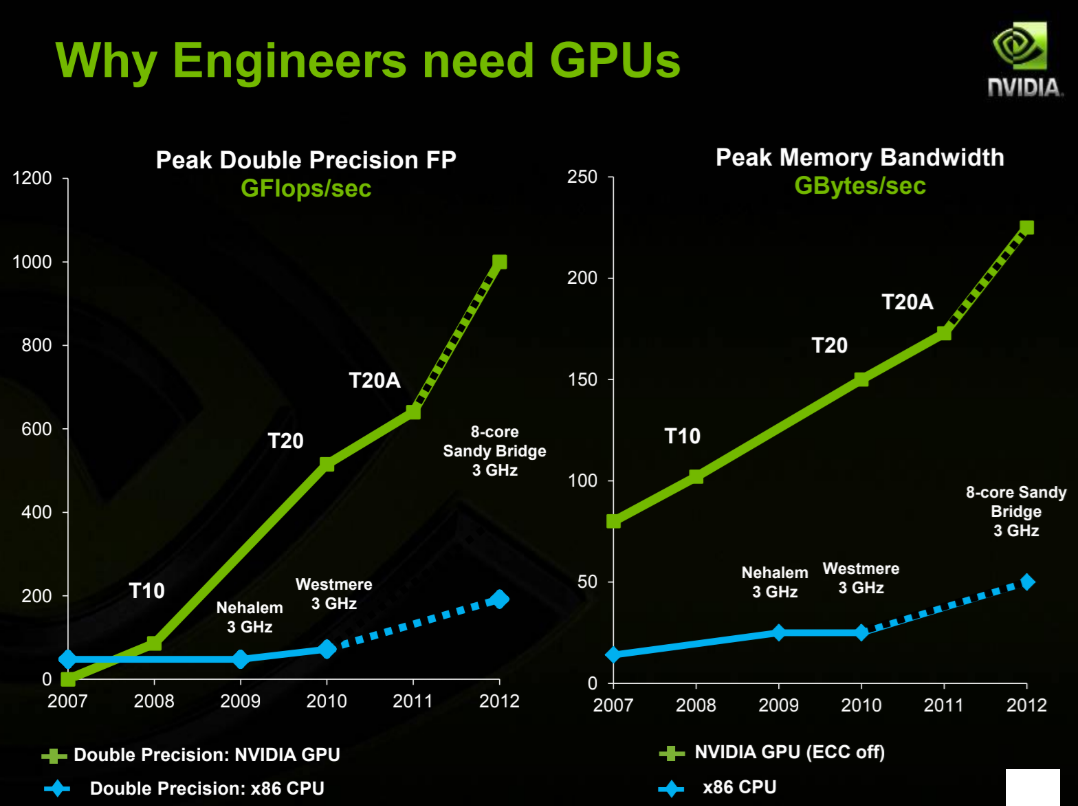
- GPU Double Precision FP performance didn't exceed x86 until 2008
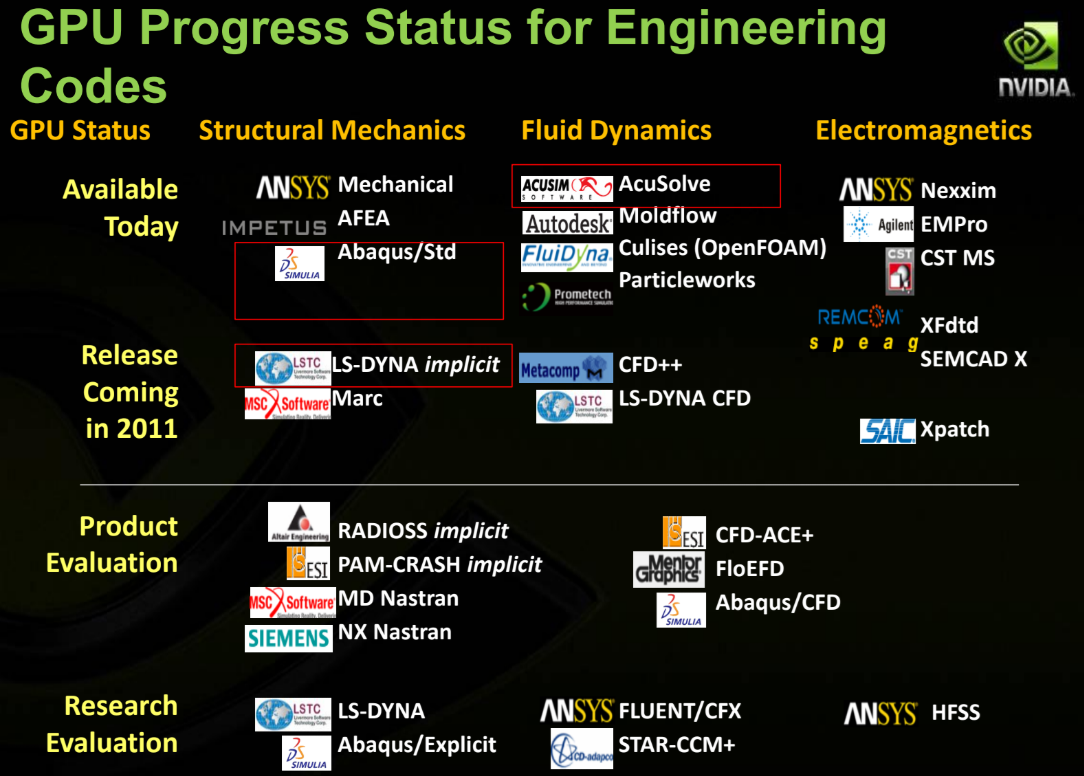
- Nvidia's "2011" big pushes were: CUDA, and Remote (Desktop/VDI) usage of GPUs such as for Mobile workstations/clients, and expanding support for engineering applications
- Strategic Vision "Go Visual, Go Parallel, Go Mobile"
It was clear even in 2011 that Nvidia had already strategically moved on from consumer gaming to the enterprise market, at least based on this slide deck.
The charts also start out with the history of visual computing - starting with 1999 "Wireframe Design" transition from UNIX/RISC to Windows/Intel. First Blade GPU in 2003. "GPU Interactive Ray Tracing" starting in 2007. (Ray Tracing GPUs for consumer later came out in 2018, and these GPUs allowed AI applications to function well).
- Nvidia was much smaller in 2011 than today -- ~ $1B vs $20B in R&D. "300 engineers dedicated to application enablement" in 2011...
- GPU Double Precision FP performance didn't exceed x86 until 2008
- Nvidia's "2011" big pushes were: CUDA, and Remote (Desktop/VDI) usage of GPUs such as for Mobile workstations/clients, and expanding support for engineering applications
- Strategic Vision "Go Visual, Go Parallel, Go Mobile"
It was clear even in 2011 that Nvidia had already strategically moved on from consumer gaming to the enterprise market, at least based on this slide deck.
The charts also start out with the history of visual computing - starting with 1999 "Wireframe Design" transition from UNIX/RISC to Windows/Intel. First Blade GPU in 2003. "GPU Interactive Ray Tracing" starting in 2007. (Ray Tracing GPUs for consumer later came out in 2018, and these GPUs allowed AI applications to function well).