






iPhone maker wants Trump administration to sign off on purchases to ease pressure from rising semiconductor prices
Apple is lobbying the Trump administration for clearance to buy memory chips from CXMT, a Chinese company that the Pentagon has put on a blacklist because of alleged connections to the People’s Liberation Army, according to six people familiar with the matter.
The iPhone maker has waged a lobbying campaign to get the White House’s blessing in order to ease the financial pressure of the rise in memory chip prices.
One person said Apple approached the commerce department more than a month ago, but the tech company has been targeting other officials across the administration and allies in Washington.
Apple is not barred from buying chips from CXMT, or YMTC, another Chinese memory chipmaker. But the Pentagon has put both companies on its Chinese Military Company blacklist. The so-called 1260H list contains dozens of Chinese groups with alleged ties to the PLA that undermine US national security.
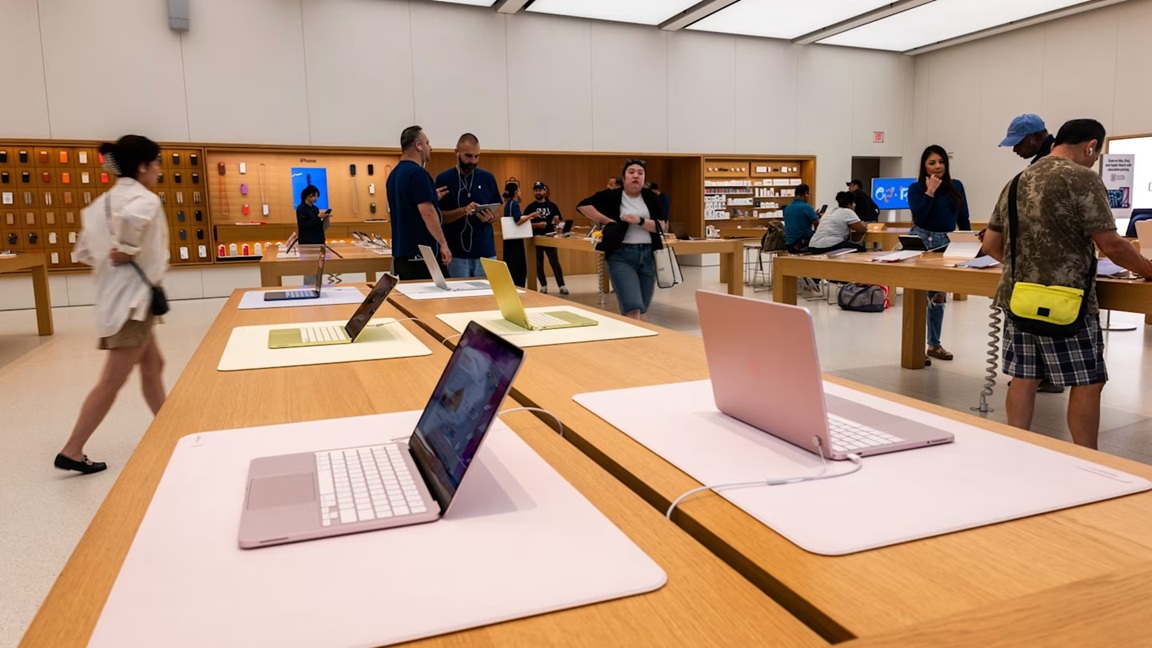
Apple’s rare move on Thursday to raise prices for MacBooks and iPads wiped $263bn from its market capitalisation, its second-biggest single-day drop. The company blamed “unsustainable” memory prices for its decision to pass on the costs to consumers, following similar moves from other consumer electronics companies.
Securing CXMT as a memory supplier would help remedy a situation in which the tech giant is being squeezed by its own suppliers.
The lobbying campaign comes after President Donald Trump met his Chinese counterpart Xi Jinping in Beijing last month. Ahead of the summit, and in the months ahead of their previous meeting in South Korea in October, the US has held back from introducing new technology-related export controls that would affect Chinese companies. The Pentagon’s 1260H list creates reputational risk for companies, but in most cases it has no legal ramifications.
The commerce department last year added CXMT to a package of Chinese groups it intended to place on a trade blacklist called the “Entity List”. But the White House told it to hold off on new export controls because the administration was in the middle of tough negotiations with China to try to reach a truce in the trade war.
But most of the people familiar with the matter said it was unclear if Apple would get any guarantee from the administration, especially a promise that the US would not later put CXMT on the Entity List. Trump last year agreed to let Nvidia sell advanced H200 chips to China, a move many of his officials opposed.
In February, the Pentagon updated the 1260H list before withdrawing it within an hour. Several people said it was removed because the White House was angry that someone at the Pentagon had taken CXMT and YMTC off the list. When the Pentagon re-released it this month, both of the Chinese memory chip manufacturers had been reinstated.
Congress would probably object strongly if the administration blessed Apple purchases from CXMT, which is the Chinese national champion.
“Apple choosing to partner with a Chinese military company would be a grave mistake,” John Moolenaar, the Republican chair of the House China committee, told the FT.
“Helping the [Chinese Communist Party] succeed in its plans to dominate critical supply chains will make our country’s tech industry and economy more dependent on China at a time when we must build secure tech supply chains with our allies,” Moolenaar said.
Apple faced a backlash in 2022 when it considered buying memory chips from YMTC for iPhones to be sold in China. Marco Rubio, who was then the top Republican on the Senate intelligence committee, told the FT that “Apple was playing with fire”.
Rubio added that Apple would be “subject to scrutiny like it has never seen from the federal government” if it proceeded to procure YMTC chips.
“It makes no sense for the administration to decouple America’s reliance on critical minerals from China, only to approve new dependencies in a field as critical as AI,” said Michael Sobolik, a security expert at the Hudson Institute.
Apple increases MacBook and iPad prices by 20%One former official warned the US risked losing another industry by letting Apple buy memory from a group that receives Chinese subsidies.
“Trump can show the courage to keep American memory alive for our security and our competitiveness or pour it down the drain so [Apple chief executive] Tim Cook can squeeze out a few more points of margin.
”Outside China, the memory chip industry is heavily consolidated into three companies. Apple relies on US chipmaker Micron in addition to South Korea’s Samsung and SK Hynix for the DRAM memory used in its devices.
CXMT has received regulatory approval to list in Shanghai as the Chinese national champion positions itself to challenge the DRAM incumbents.
DRAM prices collapsed in 2023 because of a supply glut. This was a boon for buyers such as Apple, which was able to secure massive amounts of cheap inventory.
But the AI boom of the past three years has seen a reversal in fortunes for the memory suppliers. As Big Tech has spent hundreds of billions of dollars for AI infrastructure, demand for advanced DRAM — known as HBM — has led to a protracted shortage of traditional memory for consumer electronics.
Apple declined to comment. The White House did not respond to a request for comment.
Apple is lobbying the Trump administration for clearance to buy memory chips from CXMT, a Chinese company that the Pentagon has put on a blacklist because of alleged connections to the People’s Liberation Army, according to six people familiar with the matter.
The iPhone maker has waged a lobbying campaign to get the White House’s blessing in order to ease the financial pressure of the rise in memory chip prices.
One person said Apple approached the commerce department more than a month ago, but the tech company has been targeting other officials across the administration and allies in Washington.
Apple is not barred from buying chips from CXMT, or YMTC, another Chinese memory chipmaker. But the Pentagon has put both companies on its Chinese Military Company blacklist. The so-called 1260H list contains dozens of Chinese groups with alleged ties to the PLA that undermine US national security.
Apple’s rare move on Thursday to raise prices for MacBooks and iPads wiped $263bn from its market capitalisation, its second-biggest single-day drop. The company blamed “unsustainable” memory prices for its decision to pass on the costs to consumers, following similar moves from other consumer electronics companies.
Securing CXMT as a memory supplier would help remedy a situation in which the tech giant is being squeezed by its own suppliers.
The lobbying campaign comes after President Donald Trump met his Chinese counterpart Xi Jinping in Beijing last month. Ahead of the summit, and in the months ahead of their previous meeting in South Korea in October, the US has held back from introducing new technology-related export controls that would affect Chinese companies. The Pentagon’s 1260H list creates reputational risk for companies, but in most cases it has no legal ramifications.
The commerce department last year added CXMT to a package of Chinese groups it intended to place on a trade blacklist called the “Entity List”. But the White House told it to hold off on new export controls because the administration was in the middle of tough negotiations with China to try to reach a truce in the trade war.
But most of the people familiar with the matter said it was unclear if Apple would get any guarantee from the administration, especially a promise that the US would not later put CXMT on the Entity List. Trump last year agreed to let Nvidia sell advanced H200 chips to China, a move many of his officials opposed.
In February, the Pentagon updated the 1260H list before withdrawing it within an hour. Several people said it was removed because the White House was angry that someone at the Pentagon had taken CXMT and YMTC off the list. When the Pentagon re-released it this month, both of the Chinese memory chip manufacturers had been reinstated.
Congress would probably object strongly if the administration blessed Apple purchases from CXMT, which is the Chinese national champion.
“Apple choosing to partner with a Chinese military company would be a grave mistake,” John Moolenaar, the Republican chair of the House China committee, told the FT.
“Helping the [Chinese Communist Party] succeed in its plans to dominate critical supply chains will make our country’s tech industry and economy more dependent on China at a time when we must build secure tech supply chains with our allies,” Moolenaar said.
Apple faced a backlash in 2022 when it considered buying memory chips from YMTC for iPhones to be sold in China. Marco Rubio, who was then the top Republican on the Senate intelligence committee, told the FT that “Apple was playing with fire”.
Rubio added that Apple would be “subject to scrutiny like it has never seen from the federal government” if it proceeded to procure YMTC chips.
“It makes no sense for the administration to decouple America’s reliance on critical minerals from China, only to approve new dependencies in a field as critical as AI,” said Michael Sobolik, a security expert at the Hudson Institute.
Apple increases MacBook and iPad prices by 20%One former official warned the US risked losing another industry by letting Apple buy memory from a group that receives Chinese subsidies.
“Trump can show the courage to keep American memory alive for our security and our competitiveness or pour it down the drain so [Apple chief executive] Tim Cook can squeeze out a few more points of margin.
”Outside China, the memory chip industry is heavily consolidated into three companies. Apple relies on US chipmaker Micron in addition to South Korea’s Samsung and SK Hynix for the DRAM memory used in its devices.
CXMT has received regulatory approval to list in Shanghai as the Chinese national champion positions itself to challenge the DRAM incumbents.
DRAM prices collapsed in 2023 because of a supply glut. This was a boon for buyers such as Apple, which was able to secure massive amounts of cheap inventory.
But the AI boom of the past three years has seen a reversal in fortunes for the memory suppliers. As Big Tech has spent hundreds of billions of dollars for AI infrastructure, demand for advanced DRAM — known as HBM — has led to a protracted shortage of traditional memory for consumer electronics.
Apple declined to comment. The White House did not respond to a request for comment.