






Tracing the Evolution of CAST’s CAN Controller IP from Classical CAN to Safety- and Security-Ready CAN XL
CAN in Automation (CiA), the international users' and manufacturers' group that supports the continued development and adoption of Controller Area Network (CAN) technology, recently recognized CAST’s ten years of active membership.
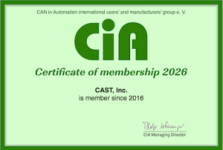
This anniversary is worth noting because the CiA has played an important role in bringing together CAN implementers, semiconductor companies, tool vendors, system developers, and other ecosystem participants around evolving CAN specifications, implementation guidance, interoperability, and industry adoption.
For CAST, this ten-year CiA milestone is part of an even longer engineering story.
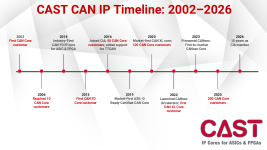
In 2002, CAST partnered with Fraunhofer IPMS to release what we believe was the industry's first vendor-independent CAN IP core for ASICs and FPGAs. CAST’s first CAN IP customer sale soon followed. Since then, CAST's CAN IP portfolio has grown from Classical CAN 2.0 support into a broader family spanning CAN FD, TTCAN, CAN XL, functional safety, and CANsec hardware security.
More than just another peripheral, in automotive, industrial, medical, robotics, maritime, and other embedded systems, a CAN bus controller like CAST’s typically sits in a real-time control path where interoperability, error handling, latency, safety readiness, software compatibility, and long-term support all matter. In these designs, proven reliability is critical to reducing system developer risk. CAST’s core has such proven reliability.
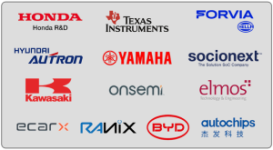
Select CAST CAN IP Core customers (most are under NDA).
CAST's CAN customer history provides evidence of this: ten CAN IP customers by 2006, 50 by 2016, 100 by 2020, and 200 announced in 2025. These milestones reflect more than sales volume: they represent repeated use by engineering teams implementing CAN across different system architectures, ASIC and FPGA technologies, software environments, and end markets.
While these numbers of successful developers are impressive, more significant is that CAST CAN IP customers have taken their end products through rigorous testing and certification programs, including work with independent testing houses such as C&S group GmbH. That kind of field and certification experience is difficult to reproduce quickly, and is one of the strongest reasons to consider CAST for a new CAN-based system design.
- ISO 11898-1: 2024, & legacy versions — Classical CAN, CAN FD & CAN XL
- ISO 11898-4 level 1 — TTCAN
- CiA 603 — CAN frame time-stamping for hardware-assisted AUTOSAR Time Synchronization over CAN
- SAE J1939 — support for commercial vehicle, heavy-duty, and industrial CAN applications
- ISO-26262 —Functional Safety ASIL-B & -D Ready
CAN remains important because it has continued to adapt, adding greater capabilities while remaining backwards compatible with its early specification.
- Classical CAN 2.0 established a robust foundation for deterministic control networking.
- CAN FD added higher data rates and payloads up to 64 bytes.
- CAN XL extends the family again, with much larger payloads and higher throughput for next-generation vehicle and industrial networks.
CAST and Fraunhofer IPMS have kept pace with these transitions from the IP supplier side. CAST announced CAN FD controller IP for ASICs and FPGAs in 2014, when CAN FD adoption was still emerging. The same long-term engineering focus continued with TTCAN support, an ISO 26262 ASIL-D Ready CAN option, CAN XL support, and CANsec hardware IP for CAN XL security.
Today, the CAST CAN-CTRL core supports Classical CAN, CAN FD, CAN XL, TTCAN, CiA 603 time stamping, AUTOSAR, and SAE J1939 use cases. That breadth is valuable because many SoC teams do not simply need “a CAN block.” They need a controller that actually fits the surrounding system architecture, aligns with established software expectations, and leaves room for the design to support both current and future CAN requirements.
Many CAN applications are safety-relevant, especially in automotive systems. CAST's safety-enhanced CAN-CTRL option includes safety mechanisms such as ECC protection for SRAM and spatial redundancy for internal logic protection. Independent testing lab SGS-TÜV Saar GmbH certified the core ASIL B ready in 2019 and ASIL D ready in 2022.
Starting with an ASIL-ready CAN controller like CAST’s simplifies parts of the safety argument, reduces uncertainty during assessment, and helps development teams move faster with fewer surprises as they achieve Functional Safety certification for their complete end product.
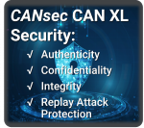
Security is also becoming more important as vehicle and industrial networks become more connected. CAST's CANsec Accelerator hardware IP is the first available core to address authentication and confidentiality for CAN XL communications, helping designers add protection without pushing the problem entirely into software or compromising timing expectations.
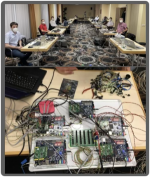
Scenes from the first CiA CAN XL Plugfest, in 2021 (courtesy of Fraunhofer IPMS).
The strongest validation for CAN IP comes from customer use, conformance work, independent testing, and certified end products. The outstanding reliability of CAST's CAN IP is built on that real-world evidence.
Plugfests organized by the CiA also add engineering value and reduce developer risk. These expose implementations to multi-vendor environments involving other controllers, transceivers, tools, test equipment,
traffic patterns, and error conditions. CAST's CAN-CTRL core has been exercised in six CiA plugfests so far, including early CAN FD testing and the first CAN XL testing with other major CAN ecosystem participants. These events help confirm practical interoperability and contribute to the core’s broader reliability record.
For many development teams, this CAST combination is the difference between just licensing an interface block and choosing an effective IP partner that supports them through successful production. CAN integration involves more than register maps and protocol conformance: it involves software expectations, test environments, safety evidence, timing behavior, implementation constraints, and support when schedule pressure is real, and CAST has proven its abilities in all these areas.
The larger story for CAST is that the company has been delivering and improving CAN IP since its first product release in 2002. Since then, the portfolio has evolved from Classical CAN to CAN FD, CAN XL, functional safety, and CANsec, while being proven in hundreds of customer designs and certification-driven development programs.
For engineers choosing IP for the next CAN-based SoC or FPGA design, that history is practical evidence. Proven, standards-aligned, continuously updated CAN IP can reduce risk where it matters most: in real chips, real systems, and real products.
Link to Press Release
CAN in Automation (CiA), the international users' and manufacturers' group that supports the continued development and adoption of Controller Area Network (CAN) technology, recently recognized CAST’s ten years of active membership.
This anniversary is worth noting because the CiA has played an important role in bringing together CAN implementers, semiconductor companies, tool vendors, system developers, and other ecosystem participants around evolving CAN specifications, implementation guidance, interoperability, and industry adoption.
For CAST, this ten-year CiA milestone is part of an even longer engineering story.
In 2002, CAST partnered with Fraunhofer IPMS to release what we believe was the industry's first vendor-independent CAN IP core for ASICs and FPGAs. CAST’s first CAN IP customer sale soon followed. Since then, CAST's CAN IP portfolio has grown from Classical CAN 2.0 support into a broader family spanning CAN FD, TTCAN, CAN XL, functional safety, and CANsec hardware security.
More than just another peripheral, in automotive, industrial, medical, robotics, maritime, and other embedded systems, a CAN bus controller like CAST’s typically sits in a real-time control path where interoperability, error handling, latency, safety readiness, software compatibility, and long-term support all matter. In these designs, proven reliability is critical to reducing system developer risk. CAST’s core has such proven reliability.
Reliability Built Through Real Customer Use
A datasheet can describe a CAN core’s protocol coverage, but IP reliability takes more. It is established through years of use in real designs, under real integration constraints, and in products that must pass their own verification, conformance, and certification processes.Select CAST CAN IP Core customers (most are under NDA).
CAST's CAN customer history provides evidence of this: ten CAN IP customers by 2006, 50 by 2016, 100 by 2020, and 200 announced in 2025. These milestones reflect more than sales volume: they represent repeated use by engineering teams implementing CAN across different system architectures, ASIC and FPGA technologies, software environments, and end markets.
While these numbers of successful developers are impressive, more significant is that CAST CAN IP customers have taken their end products through rigorous testing and certification programs, including work with independent testing houses such as C&S group GmbH. That kind of field and certification experience is difficult to reproduce quickly, and is one of the strongest reasons to consider CAST for a new CAN-based system design.
IP that Keeps Pace with the CAN Roadmap
CAST CAN Controller Core Specifications Support- ISO 11898-1: 2024, & legacy versions — Classical CAN, CAN FD & CAN XL
- ISO 11898-4 level 1 — TTCAN
- CiA 603 — CAN frame time-stamping for hardware-assisted AUTOSAR Time Synchronization over CAN
- SAE J1939 — support for commercial vehicle, heavy-duty, and industrial CAN applications
- ISO-26262 —Functional Safety ASIL-B & -D Ready
CAN remains important because it has continued to adapt, adding greater capabilities while remaining backwards compatible with its early specification.
- Classical CAN 2.0 established a robust foundation for deterministic control networking.
- CAN FD added higher data rates and payloads up to 64 bytes.
- CAN XL extends the family again, with much larger payloads and higher throughput for next-generation vehicle and industrial networks.
CAST and Fraunhofer IPMS have kept pace with these transitions from the IP supplier side. CAST announced CAN FD controller IP for ASICs and FPGAs in 2014, when CAN FD adoption was still emerging. The same long-term engineering focus continued with TTCAN support, an ISO 26262 ASIL-D Ready CAN option, CAN XL support, and CANsec hardware IP for CAN XL security.
Today, the CAST CAN-CTRL core supports Classical CAN, CAN FD, CAN XL, TTCAN, CiA 603 time stamping, AUTOSAR, and SAE J1939 use cases. That breadth is valuable because many SoC teams do not simply need “a CAN block.” They need a controller that actually fits the surrounding system architecture, aligns with established software expectations, and leaves room for the design to support both current and future CAN requirements.
Safety and Security for Modern Systems
Many CAN applications are safety-relevant, especially in automotive systems. CAST's safety-enhanced CAN-CTRL option includes safety mechanisms such as ECC protection for SRAM and spatial redundancy for internal logic protection. Independent testing lab SGS-TÜV Saar GmbH certified the core ASIL B ready in 2019 and ASIL D ready in 2022.
Starting with an ASIL-ready CAN controller like CAST’s simplifies parts of the safety argument, reduces uncertainty during assessment, and helps development teams move faster with fewer surprises as they achieve Functional Safety certification for their complete end product.
Security is also becoming more important as vehicle and industrial networks become more connected. CAST's CANsec Accelerator hardware IP is the first available core to address authentication and confidentiality for CAN XL communications, helping designers add protection without pushing the problem entirely into software or compromising timing expectations.
Validation in the Real World
Scenes from the first CiA CAN XL Plugfest, in 2021 (courtesy of Fraunhofer IPMS).
The strongest validation for CAN IP comes from customer use, conformance work, independent testing, and certified end products. The outstanding reliability of CAST's CAN IP is built on that real-world evidence.
Plugfests organized by the CiA also add engineering value and reduce developer risk. These expose implementations to multi-vendor environments involving other controllers, transceivers, tools, test equipment,
traffic patterns, and error conditions. CAST's CAN-CTRL core has been exercised in six CiA plugfests so far, including early CAN FD testing and the first CAN XL testing with other major CAN ecosystem participants. These events help confirm practical interoperability and contribute to the core’s broader reliability record.
A Clear Position in a Competitive CAN IP Market
Automotive and other system developers have several choices for CAN IP. CAST's distinction goes well beyond simply offering a CAN controller core: CAST offers a unique combination of long customer history, broad protocol coverage, high-reliability implementation experience, functional safety readiness, CAN XL and CANsec support, ASIC and FPGA deployment experience, and responsive engineering support.For many development teams, this CAST combination is the difference between just licensing an interface block and choosing an effective IP partner that supports them through successful production. CAN integration involves more than register maps and protocol conformance: it involves software expectations, test environments, safety evidence, timing behavior, implementation constraints, and support when schedule pressure is real, and CAST has proven its abilities in all these areas.
Ten Years in CiA, and Still Moving Forward
CAST's ten-year CiA membership reflects the company’s sustained engagement with the CAN ecosystem during a period that included wider CAN FD adoption, increasing functional safety expectations, the emergence of CAN XL, and early work around CANsec.The larger story for CAST is that the company has been delivering and improving CAN IP since its first product release in 2002. Since then, the portfolio has evolved from Classical CAN to CAN FD, CAN XL, functional safety, and CANsec, while being proven in hundreds of customer designs and certification-driven development programs.
For engineers choosing IP for the next CAN-based SoC or FPGA design, that history is practical evidence. Proven, standards-aligned, continuously updated CAN IP can reduce risk where it matters most: in real chips, real systems, and real products.
Link to Press Release